
Hydrogrand Steel Pipe Co.,ltd.
FOCUS ON QUALITY, OFFER BEST PRODUCTS.
FOCUS ON QUALITY, OFFER BEST PRODUCTS.

Estándar: BS970 535A99/EN31
Tamaño:
Diámetro : 80 a 600mm
Longitud: 1000 a 9000mm
Especificación:
Maquinabilidad del acero EN31:
El acero EN31 es un miembro potencial en Industria del automóvil, y alcanzando exactitud dimensional con excepcional Las características de la superficie son una tarea desafiante al mecanizar esta aleación. Las investigaciones actuales se ocupan del mecanizado por descarga eléctrica de alambre (WEDM) De EN31 mueren acero y establecen una comprensión fundamental del proceso Parámetros sobre las características de la superficie mecanizada a microescala. Parámetros de WEDM Tales como el tiempo de encendido del pulso, el voltaje servo, la alimentación del alambre y la tensión del alambre se agrupan en Una manera eficiente de entender la influencia de estos parámetros en el borde Rugosidad, anchura del kerf y tarifa del corte. El estudio actual reveló que bajo El pulso a tiempo y el voltaje servo disminuyeron anchura del kerf y aspereza de borde. Sin embargo, la velocidad de corte disminuyó con el tiempo de encendido del pulso pero aumentó con el servo Voltaje. Se encontró que la tensión del alambre y la alimentación del alambre tienen diversos efectos en la respuesta Parámetros. Mientras que la rugosidad del borde variaba inversamente, la anchura del corte era directamente Proporcional a la alimentación del alambre correspondiente a una tensión más baja del alambre.
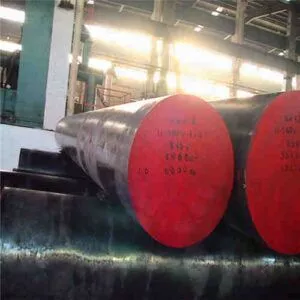
EN31 Alloy Steel Machining, Our production completely according to the EN31 Alloy Steel standards to meet the EN31 Alloy Steel Machining, can also according to the customer request, to meet the requirements of customers of EN31 Alloy Steel Machining.
EN31 Steel Rod is a actual high strength steel alloy which is tough and hardened before contributing and has nickel, chromium, molybdenum making it great tensile steel power, with decent ductility and uniform resistance. EN31 is an actual great strength alloy manufacturing steel. EN31 mechanical properties is a superiority high carbon alloy steel which propositions a high degree of rigidity with compressive power and scrape resistance.
EN31 Alloy Steel is a high carbon, chromium containing low alloy steel that is through hardening and noted in particular for use as bearings. AISI 52100 has an excellent high carbon alloy steel which provides a high level of hardness with compressive strength and abrasion resistance. This grade of alloy steel is quite regularly utilized for wear resisting machine constituents and for press instruments.
Components with friction surfaces require high surface hardness in order to resist wear. In this work, EN31 steel used in bearings, spline shafts, and tiller blades, is surface-hardened using gas tungsten arc (GTA). To further improve the hardness, cryogenic treatment was done. GTA torch uses thoriated tungsten (2%) electrode to apply the heat on the friction surface. The welding current and angle of the electrode tip were varied to obtain different heat inputs during surface hardening process. Cryogenic treatment was done for five different soaking periods at − 50 °C [shallow cryogenic treatment (SCT)] and − 196 °C [deep cryogenic treatment (DCT)]. Shallow cryogenic treatment was performed using dry ice, and deep cryogenic treatment was performed using liquid nitrogen. Micro-hardness and microstructures of the specimen were studied. Microstructure study shows that considerable amount of retained austenite has been transformed to plate martensite with precipitates of carbide particles, increasing the hardness of the surface. Surface hardness increases with current and soaking period. The maximum hardness is obtained at 200 A for all electrode tip angles. The maximum hardness is obtained at 15 h of soaking period. Specimens treated at − 190 °C were found to exhibit higher hardness than specimens treated at − 50 °C. Further, 200 A welding current with 45° electrode tip angle and 15 h of soaking period for both SCT and DCT is found to produce maximum hardness.
The range of EN31 Round Bars which we manufacture for our customers are of high quality and these round bars are used for making machineries and OEM Auto components. These products have been made keeping in mind the quality parameters which have been set by the industry in the market. EN31 Round Bars are always supplied with the test certificates and can be supplied in bulk quantity as well as retail quantity as per customers requirements. EN31 alloy Steel round bars are supplied by us to various industries.
EN31 is a very high strength steel alloy which is hardened and tempered before supplying and has nickel, chromium, molybdenum making it high tensile steel strength, with good ductility and wear resistance. With relatively good impact properties at low temperatures, EN31 is also suitable for a variety of elevated temperature applications. EN31 round bars have good internal strength and high external strength, which makes it highly wear resistant. EN31 steel round bars offer good combination of ductility, strength and wear resistance. EN31 is a very high strength alloy engineering steel.
EN31 round bars are fundamentally used as a Connector between the pipes at the middle. They are also used as a socket in to struggle pressure in Pressure Regulators. EN31 steel bar have chromium and is heat preserved for making products like front automobile axles, Obverse Axle beam, axle periodicals, crankshafts, steering components. EN31 Alloy Steel Bar are basically used as a Connector between the pipes at the middle whereas EN31 steel bar are average carbon and chromium steel, with decent ductile strength.
|
Standard |
Grade |
C |
Mn |
P |
S |
Si |
Ni |
Cr |
Cu. |
Mo. |
|
ASTM A295 |
52100 |
0.93-1.05 |
0.25-0.45 |
0.025 |
0.015 |
0.15-0.35 |
0.25 |
1.35-1.60 |
0.3 |
0.1 |
|
DIN 17230 |
100Cr6 / 1.3505 |
0.90-1.05 |
0.25-0.45 |
0.03 |
0.025 |
0.15-0.35 |
0.3 |
1.35-1.65 |
0.3 |
– |
|
JIS G4805 |
SUJ2 |
0.95-1.10 |
0.5 |
0.025 |
0.025 |
0.15-0.35 |
– |
1.30-1.60 |
– |
– |
|
BS 970 |
535A99/EN31 |
0.95-1.10 |
0.40-0.70 |
– |
– |
0.10-0.35 |
– |
1.20-1.60 |
– |
– |
|
U.T.S |
95 KSI Min |
|
0.2% Proof Stress |
75 KSI Min |
|
Elongation |
0.17 |
|
Red of Area |
0.35 |
Heat slowly and begin forging at 1000-1050°C. Allow sufficient time at the forging temperature for the steel to be thoroughly soaked through. Re heat as necessary and do not forge below 850°C. After forging EN31 steel, cool slowly preferably in a furnace.
Heat treatment temperatures, including rate of heating, cooling and soaking times will vary due to factors such as the shape and size of each EN31 component. Other considerations during the heat treatment process including the type of furnace, quenching medium and work piece transfer facilities. Please consult your heat treatment provider for full guidance on heat treatment of EN31.
EN31 is usually supplied in the annealed and machineable condition. Re-annealing will only be necessary if the steel has been forged or hardened. To anneal, heat the EN31 steel slowly to 800-810°C, soak well and allow to cool in the furnace.
When parts are to be heavily machined, stress relieving will be beneficial prior to hardening. Heat the EN31 carefully to 700°C, soak well and allow to cool in air.
Heat slowly to the hardening temperature of 800-820°C. Maintain until thoroughly soaked through. Plenty of time must be given for this soaking and then quench in oil.
Temper according to the purpose for which the tools are required, generally between 150°C and 300°C. Soak well at the selected temperature and soak for at least one hour per 25mm of total thickness. Cool slowly in air.


 English
 Whatsapp:+86-13786196061
 Correo electrónico:info@hgsteelpipe.com
 Deja un mensaje ahora